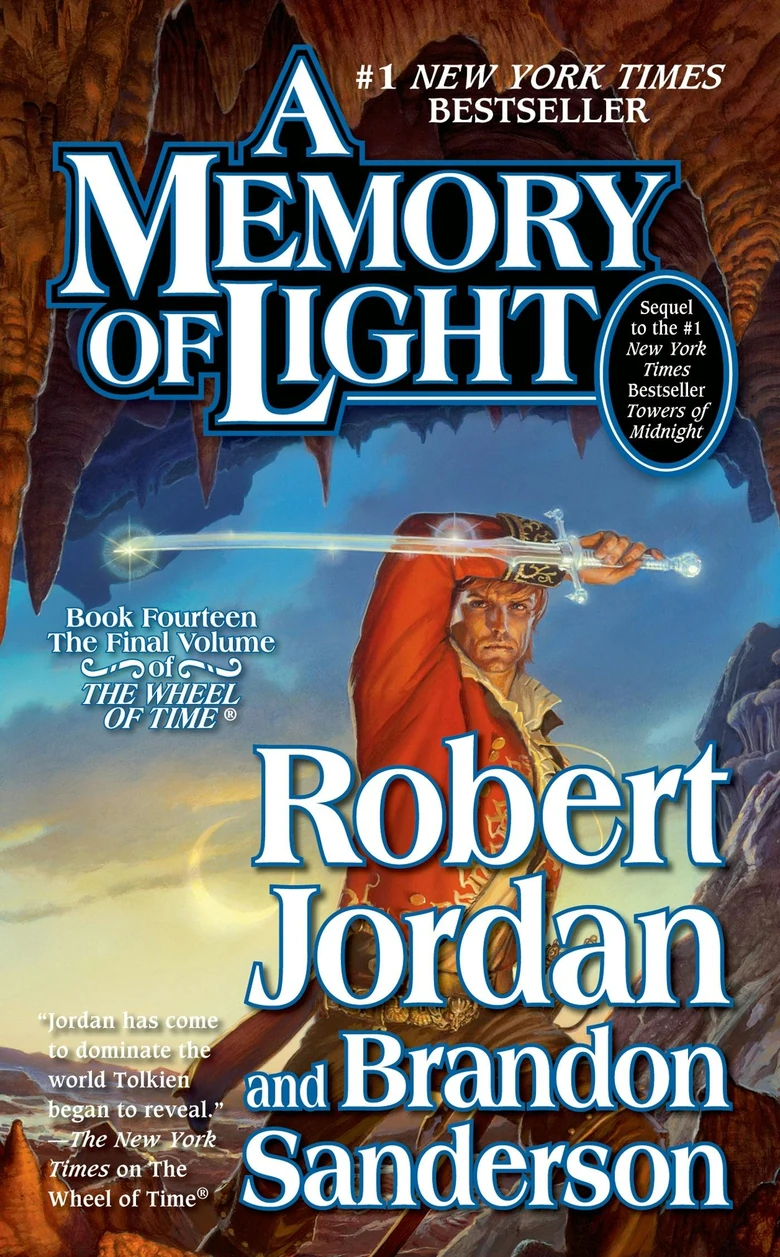
By the time you get here, there is almost an impossible amount for this book to finish.
The Last Battle is finally happening, everybody is being pulled into it, and there are characters I’ve been following for thousands of pages who suddenly have to prove what all that growth actually meant.
What I liked is that the battle never completely takes over the people inside it.
There are armies moving everywhere, huge uses of the One Power, strategy, sacrifices, and enough chaos that it could have turned into one long description of who attacked who. But the moments that stuck with me were still the personal ones. Somebody keeping a promise. Somebody showing up when they’re needed. Somebody making a choice that only really means something because you remember who they were ten books ago.
Rand’s story works especially well because this was never going to be solved by him just becoming more powerful than everybody else.
He’s spent so much of the series convincing himself that everything rests on him. He’s hardened himself, pushed people away, tried to carry things nobody could realistically carry alone, and eventually had to figure out that responsibility doesn’t mean doing everything yourself.
That felt like the right place for his story to end up.
Mat is also exactly where I wanted him to be by this point.
The guy who spent half the series insisting he wanted nothing to do with any of this ends up being one of the people everybody desperately needs. And the best part is that he’s still Mat. He doesn’t suddenly become some stiff, serious military hero giving inspirational speeches. He’s still sarcastic, still complaining, still thinking about the odds—and still ridiculously good when everything goes to hell.
Watching his ability as a commander finally matter on this kind of scale was one of my favorite parts of the ending.
Perrin’s path feels different, but it works for the same reason. He finally becomes comfortable with abilities and responsibilities he spent so much time fighting against. Rand, Mat, and Perrin started as three boys running out of the Two Rivers together, and by the end they’ve become completely different men without losing that connection to where they came from.
And there are so many other characters who get their moment.
That’s part of what made the ending satisfying for me. This doesn’t suddenly become Rand’s story again just because he’s the Dragon Reborn. The Last Battle belongs to everybody who made it this far.
There is an enormous amount of fighting. At times it almost has to be exhausting because the characters themselves are exhausted and there really isn’t anywhere left to retreat to. I did want a little more time afterward, though.
After spending this many books with these people, I could have happily read another hundred pages of them just figuring out what the hell life looks like now.
But I also understand why the ending doesn’t neatly explain what happens to every single person.
The Wheel of Time became too big for that a long time ago.
What mattered to me was that the ending respected the characters I had spent the entire series following. The battles were huge, but the relationships were still what made any of it worth caring about.
And after fourteen books, I still wanted more.
That’s probably the best compliment I can give it.
Who I’d recommend it to: If you’ve made it this far, you don’t need me to convince you. This is the payoff for everything the series has been building.
Caution: The Last Battle is massive and takes up a huge part of the book, so there isn’t as much quiet aftermath as I would have liked.
Discussion question: When you finished A Memory of Light, were you satisfied—or did you immediately wish Jordan and Sanderson had given us another hundred pages with everyone afterward?
— Cory Lane