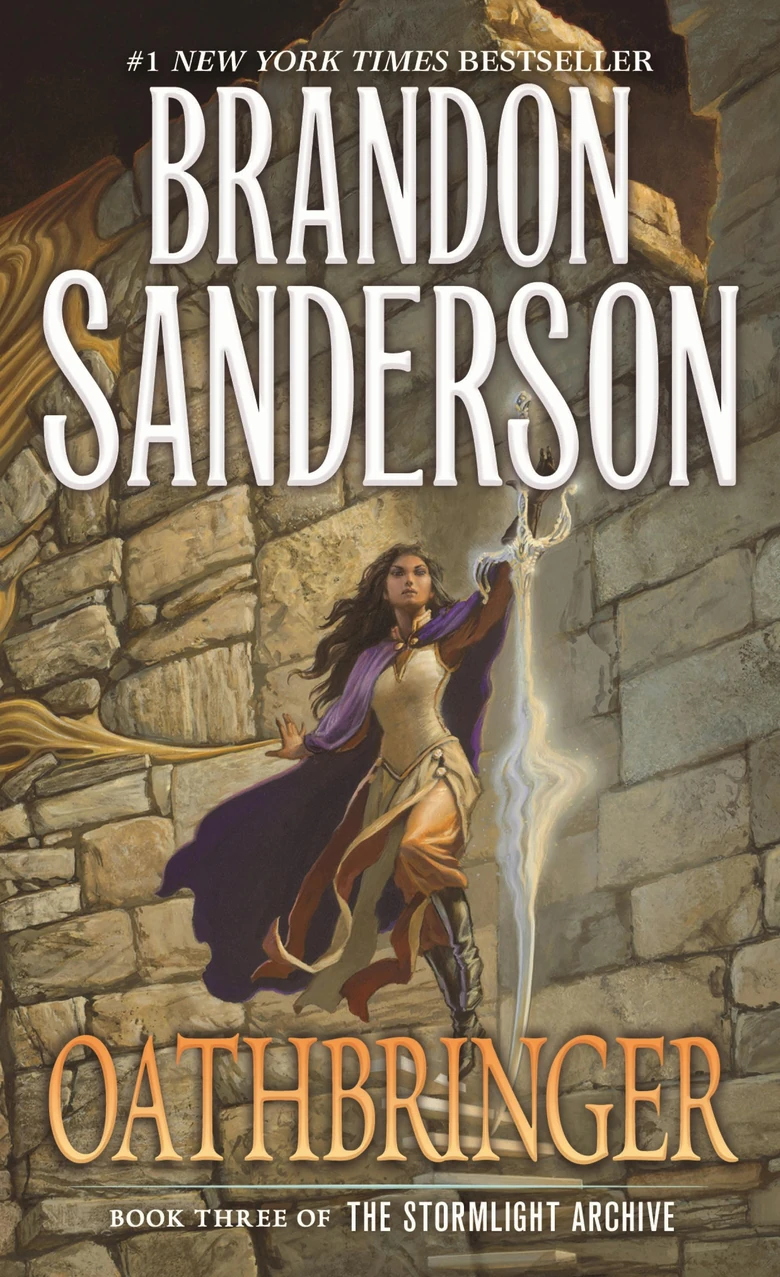
Oathbringer is probably the book where Dalinar really became more interesting to me.
I don’t look at his past and think he was just some completely fucked-up person. He did some terrible things, obviously, but what I liked was seeing how different he became from the man he used to be. His views changed, the way he looked at people changed, and he was actually trying to become somebody better instead of pretending his past never happened.
That part worked for me a lot more than all the guilt and self-pity around it.
Brandon Sanderson does that with a lot of his characters. They spend a lot of time beating themselves up over what they’ve done, what they should have done, who they think they are, and whether they deserve to move forward. Sometimes that adds a lot to the character. Other times I’m thinking, all right, we get it, you feel terrible.
Dalinar finally owning what he did was the important part for me. The whole “you cannot have my pain” moment is fine, and I understand why people love it, but the line itself wasn’t what made the story work for me. It was the fact that he finally stopped running from his past and accepted that it belonged to him.
That’s one of the things I think Oathbringer does really well. It shows that somebody can have an ugly past and still change. It doesn’t erase what happened, and it doesn’t pretend becoming a better person magically makes everything okay. Dalinar still has to live with what he did. He just doesn’t have to stay the same person forever.
Kaladin is still Kaladin, which means I’m still invested in him and still occasionally wanting to shake him. Sanderson keeps putting him in situations where there isn’t an obvious good side anymore. The people he’s supposed to fight aren’t always monsters, and the people he’s supposed to protect aren’t automatically right. That makes his whole idea of protection a lot more complicated than it was earlier in the series.
Moash was interesting for almost the opposite reason.
I actually started liking him. I understood where some of his anger came from, and I liked that Sanderson gave him real beliefs instead of turning him into some generic bad guy. Then he keeps following those beliefs farther and farther until he ends up on the other side.
I like that.
Not necessarily because I agree with Moash, but because he feels like somebody who made choices and then kept walking down that road. Sanderson lets you understand why he thinks the way he does without telling you that makes everything he does okay. Watching somebody you started to understand become an enemy makes him much more interesting than if he had just been an asshole from the beginning.
Shallan’s different identities didn’t bother me as much as I thought they might, although they did start wearing on me a little. Veil and Radiant are interesting because they show how Shallan deals with things she doesn’t want to face as herself, but sometimes I wanted her to just be Shallan for a while.
And then there’s Szeth.
I like Szeth. I liked him when he was terrifying everybody earlier in the series, and I like where Sanderson takes him here.
And Nightblood is fucking badass.
There really isn’t a better way to say it.
A sentient sword with its own personality and its own completely warped idea of destroying evil is already a great concept, but putting Nightblood in Szeth’s hands makes both characters more interesting. If you’ve read Warbreaker, there’s also that extra Cosmere connection that makes the whole thing even better.
I especially liked seeing where Szeth ultimately chooses to stand. He’s spent so much of the series being controlled by other people, laws, beliefs, and obligations that watching him start making his own choices is probably what makes him more interesting to me as the series goes on.
The ending worked for me too. Sanderson’s books can take a long damn time getting all the pieces into position, but when everything finally starts coming together, he’s very good at making all those separate storylines feel like they were building toward the same thing.
That’s also probably my biggest issue with Stormlight as a whole.
These books are incredibly intricate. There are characters, cultures, magic systems, politics, spren, history, different orders of Radiants, Cosmere connections, and a hundred smaller things happening in the background. I like that depth, but if you don’t read the books fairly close together, it can be really easy to forget where somebody was, why something mattered, or what the hell happened three hundred pages ago in the previous book.
That’s not necessarily a criticism of the story itself. It’s more the price you pay for a series this big.
Oathbringer gave me more of what I wanted from Stormlight. Dalinar becomes much more complicated, Moash becomes more interesting for completely different reasons, Szeth gets even better, Nightblood is awesome, and the story keeps making Roshar and the larger Cosmere feel bigger.
I also liked that the ending actually felt like things came together instead of just setting up another thousand pages of questions. There are obviously still plenty of questions left, but the book earns its payoff.
— Cory Lane