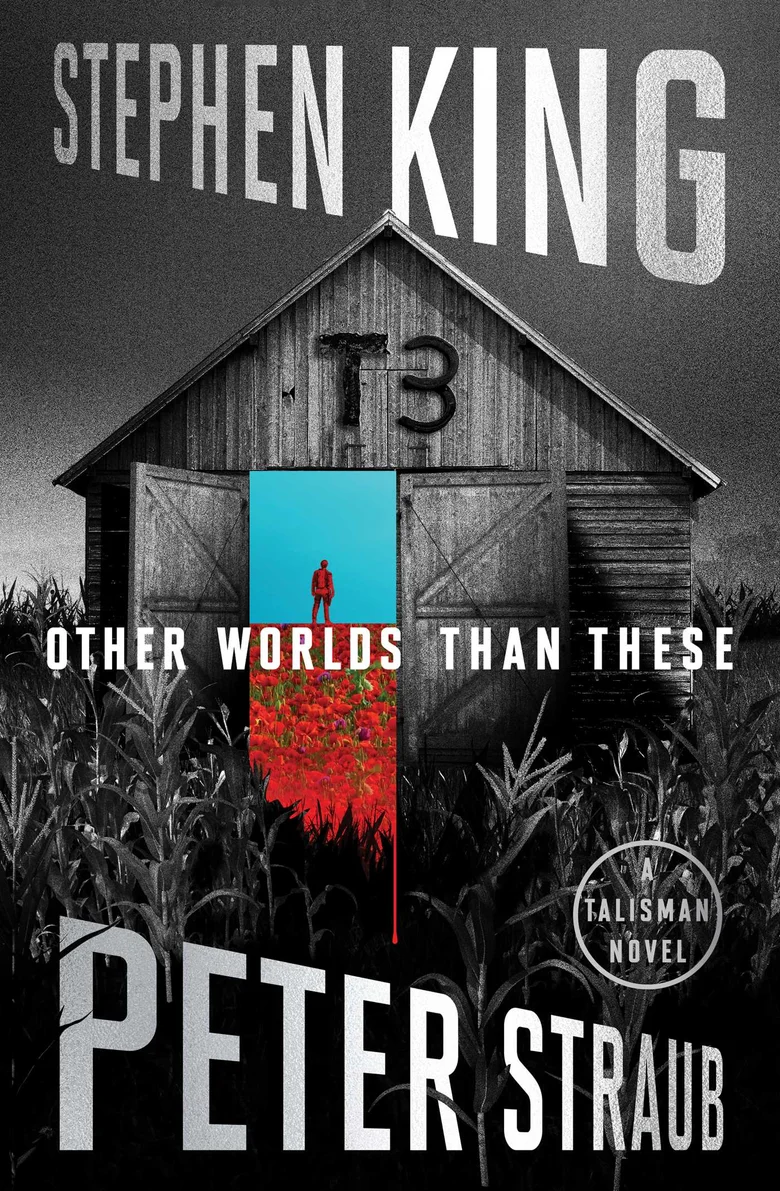
I liked Other Worlds Than These. It didn’t become my favorite of the three, but I still thought it was worth reading. There were some slow stretches, and the ending didn’t surprise me, but getting back into this world—and seeing all the connections to The Dark Tower—gave me plenty to enjoy.
Jack Sawyer has already been through a hell of a lot by this point. We first met him as a twelve-year-old crossing between worlds to save his mother, then caught up with him as an adult in Black House. Here, he’s older again, and the danger reaches well beyond his own life. Infected teenagers on our side and the mysterious Gullet at the edge of Mid-World threaten more than one world.
After everything in the first two books, Jack apparently still doesn’t get to have a quiet life.
One of the interesting things about this trilogy is how different the books feel. The Talisman follows a kid on a dangerous journey, with friendship and adventure running through its darker parts. Black House takes Jack into a much heavier story, starting with a murder investigation before opening onto something bigger. By the time you reach Other Worlds Than These, there’s a lot of history behind both Jack and the worlds he’s moving through.
The Dark Tower connections were easily my favorite part of this one.
I’ve read all of The Dark Tower, and I love seeing how King’s other stories connect to it. Once you’ve followed Roland through that whole journey, those connections mean more. A place or an idea can bring another book back to mind, and suddenly you’re thinking about how the pieces fit together across stories you read separately.
That’s a big part of why I wanted to read this book in the first place, and it was the part I enjoyed most. I like being able to follow Jack’s story while also getting more of the wider world around the Tower. There’s a lot of appeal in returning to somewhere familiar and finding that another story still has something to add to it.
The pacing was where the book lost some ground for me. There were parts that moved slowly, and I would have liked those stretches to get moving a little sooner. I don’t need constant action, but there’s a difference between enjoying the time a story takes and feeling ready for it to move on. This one had moments of both.
That didn’t ruin the book. It did keep me from enjoying it as consistently as I would have liked. The connections were interesting enough to make the return worthwhile, but I still noticed when the pace slowed down.
The ending was good, although I saw it coming. I won’t get into what happens, but the direction became predictable for me before I reached the finish. That took some of the surprise out of it.
I still liked the conclusion, though. Figuring out where a story is headed doesn’t automatically mean the ending stops working. In this case, I could see it coming and still be satisfied with where it ended up. I just didn’t get that extra jolt of being caught off guard.
Other Worlds Than These leaves me in a fairly straightforward place: good book, worth reading, and a return I’m glad I made. It wouldn’t be my pick for the strongest of the trilogy, but the Dark Tower connections were a damn good reason to come back.
Who I’d recommend it to
Readers who have followed Jack through The Talisman and Black House, especially those who also love The Dark Tower. Seeing how King’s worlds connect was the biggest draw for me here, and I think that familiarity adds a lot to the experience.
Caution
I’d read the first two Talisman books before this one. Expect some slower stretches rather than a story that races straight through to the finish. If you’re discussing the ending or specific Dark Tower connections, clearly mark your spoilers.
Discussion questions
Where does Other Worlds Than These rank for you among the three Talisman books?
Were the Dark Tower connections your favorite part, or were you more interested in Jack’s story on its own?
Did you see the ending coming? If you did, did that change how much you enjoyed it?
— Cory Lane