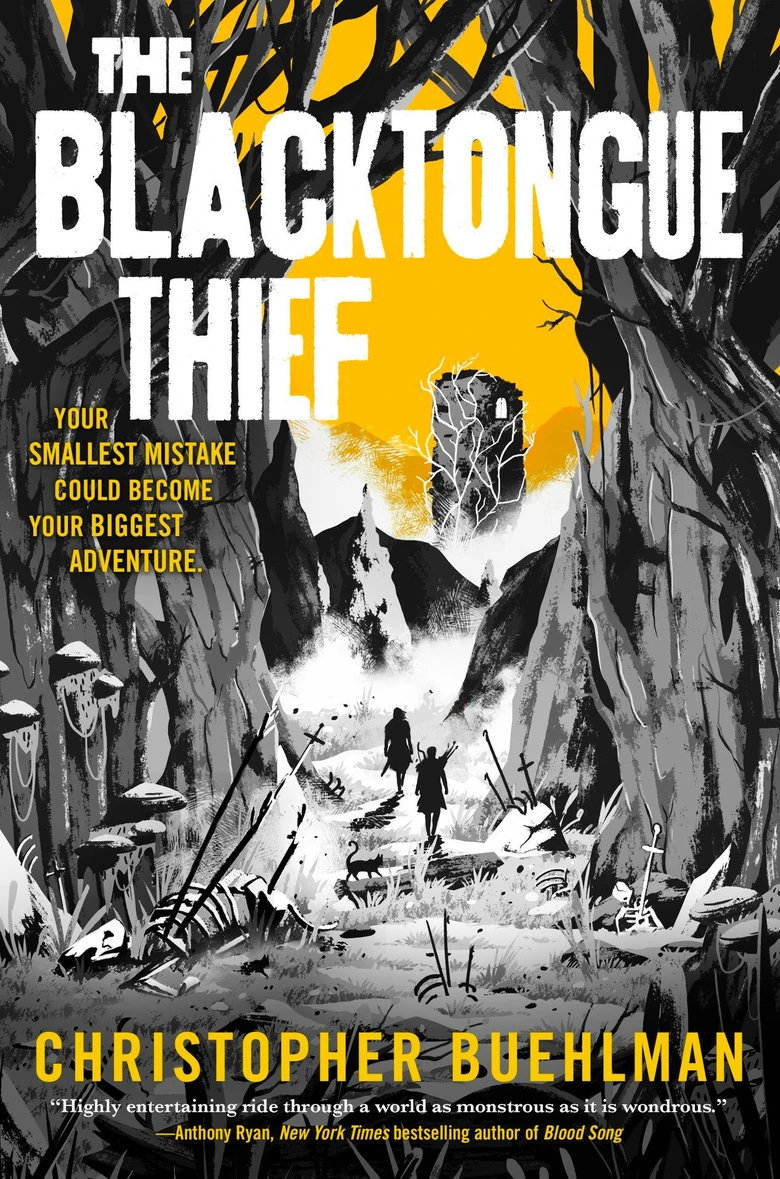
Kinch's voice is the book's first gamble. He is vulgar, observant, self-serving, and often funny at exactly the wrong moment. What makes that voice work for me is the sense that humor is doing a job. He uses it to manage fear, distract an audience, and avoid sitting too long with a world whose damage is everywhere.
Galva gives the journey a necessary counterweight. Her seriousness doesn't exist merely to provide a straight face for Kinch's jokes; she has purpose and grief that his performance cannot comfortably absorb. Their uneasy proximity lets the reader see the limits of his narration. The person telling the story is not always the person best equipped to understand what matters in it.
The setting feels bruised by earlier wars. Debt, institutions, and prejudice shape the travelers' choices as much as monsters do. Buehlman's digressions can interrupt the road's momentum, but they also suggest a life continuing outside the immediate plot. I would rather have that unruly texture than a tidier journey with nothing to say beyond its next destination.
The catch is that Kinch remains in your ear throughout. If his register grates, no clever worldbuilding will make that disappear. For the right reader, though, the mismatch between his evasions and his capacity to care gives the adventure its unexpected tenderness.
— Cory Lane