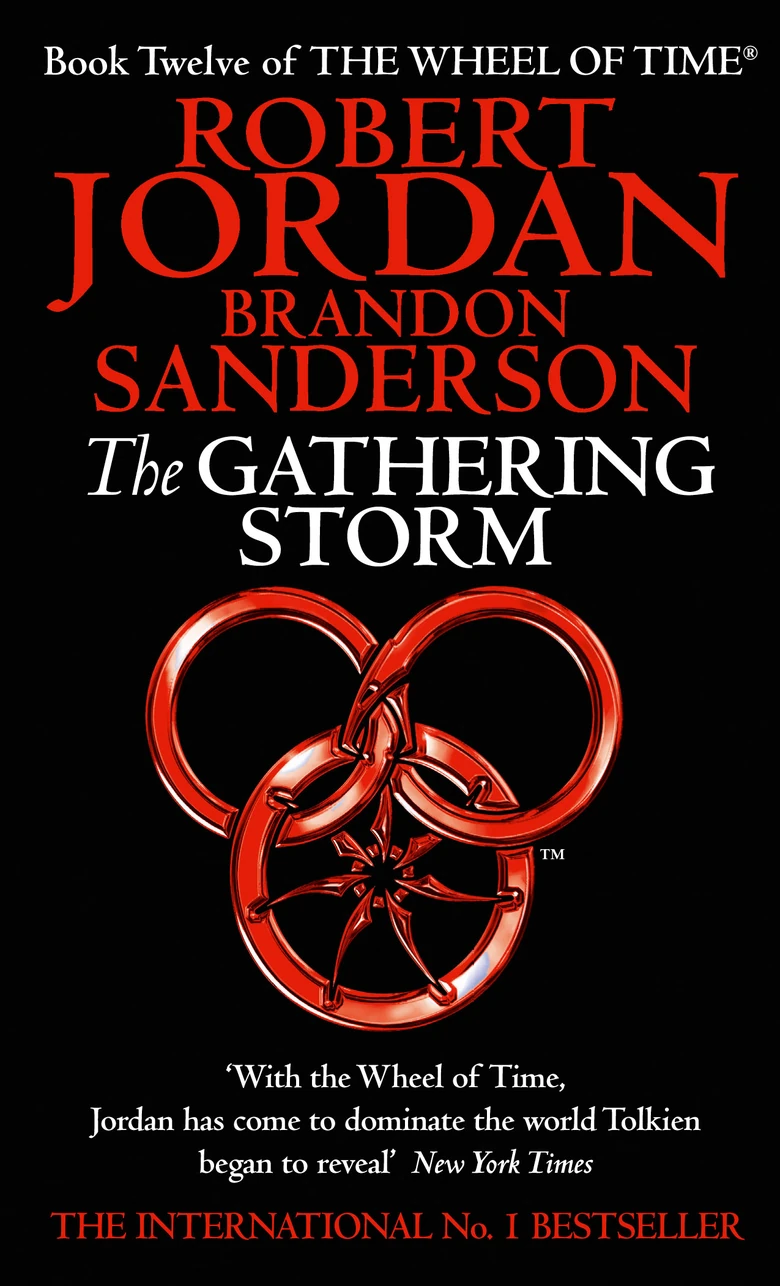
You can definitely tell there’s a change in the writing with Brandon Sanderson taking over, and I don’t think there’s any point pretending otherwise. Some of the dialogue feels different, and the story is a little more direct in places where Jordan probably would have taken his time getting there.
But considering what Sanderson inherited, I think he does a hell of a job keeping this feeling like The Wheel of Time.
Rand and Egwene were probably the two characters that stood out most to me here because they’re both under an enormous amount of pressure, but they handle it completely differently.
Rand has convinced himself that the only way he can survive what’s coming is to become harder. He keeps shutting pieces of himself off because he thinks caring about people gives his enemies something they can use against him.
I understood why he was doing it, but watching him go down that road was rough because you can see that he’s starting to confuse being strong with feeling nothing.
That’s something I think the series does really well. Rand has every reason in the world to be angry, suspicious, and exhausted. The problem is that those reasons don’t necessarily make every choice he makes a good one.
Egwene is almost the opposite.
She spends a huge part of the book without the kind of control Rand has, but she never really lets anybody else decide who she is. She starts proving that being the Amyrlin isn’t just about sitting on a throne or having people call you by a title. It’s about how she behaves when nobody is required to treat her like one.
I really liked watching her earn authority instead of just demanding it.
Mat is still one of my favorite characters, although I could definitely feel the difference in his voice after Sanderson took over. Some of the humor feels like Sanderson is trying a little too hard to make Mat funny instead of just letting Mat be funny.
It didn’t ruin him for me, but I noticed it.
At the same time, Sanderson handles the bigger emotional parts of the book really well. By this point we’re getting close enough to the Last Battle that it would have been easy to just start moving armies around and racing toward the ending.
Instead, the book comes back to something more important: what kind of person is Rand going to be when he gets there?
Because saving the world doesn’t mean much if there’s nothing left of him by the time he does it.
That’s what made this book work for me. It moves the larger story forward, but some of the biggest moments are really about Rand and Egwene becoming very different kinds of leaders.
And knowing that Robert Jordan wasn’t able to finish the series himself adds another layer to reading it. Sanderson was stepping into something enormous, with characters people had been following for nearly twenty years. I don’t think anyone could make that transition completely invisible, and honestly I’m glad he didn’t try to.
Who I’d recommend it to: Anyone who has made it this far in The Wheel of Time. This is where you really start feeling that the end is coming, while still getting some major character payoff along the way.
Caution: The change in authorial voice is noticeable, especially with some of Mat’s humor, but it still feels like the same story and the same characters overall.
Discussion question: Which impressed you more in The Gathering Storm—Rand’s story or Egwene’s?
— Cory Lane