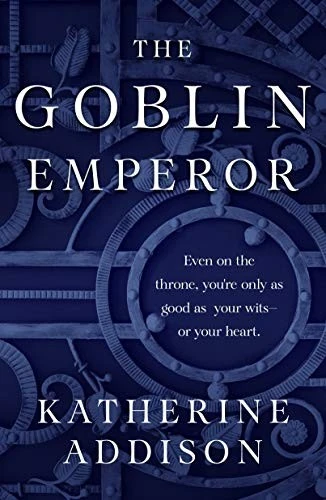
Maia arrives at court without the preparation everyone assumes a ruler should possess. The immediate tension is wonderfully small-scale: whom can he ask a question, which mistake will be remembered, and when is an offer of help actually a claim on him? Addison makes protocol feel consequential because Maia cannot afford to treat it as theater.
What I admire is that decency requires effort here. Maia has reasons to be suspicious and resentful. Choosing to pay attention to other people is not proof that he has escaped those feelings; it is a practice he has to sustain despite them. Csevet's competence provides welcome relief, but it never removes the fundamental problem of learning whom to trust.
The court's names, forms of address, and intricate relationships can make the first stretch demanding. I occasionally wanted a conversation to move without another reminder of rank. But the vocabulary is also part of Maia's estrangement: he must learn a language of belonging in a place that has already judged him.
Readers looking for constant action may find the scale too quiet. I find the quietness an advantage. Listening carefully, apologizing, and refusing an inherited cruelty become meaningful acts of rule. The book gives those acts weight without pretending that they solve every political problem.
— Cory Lane