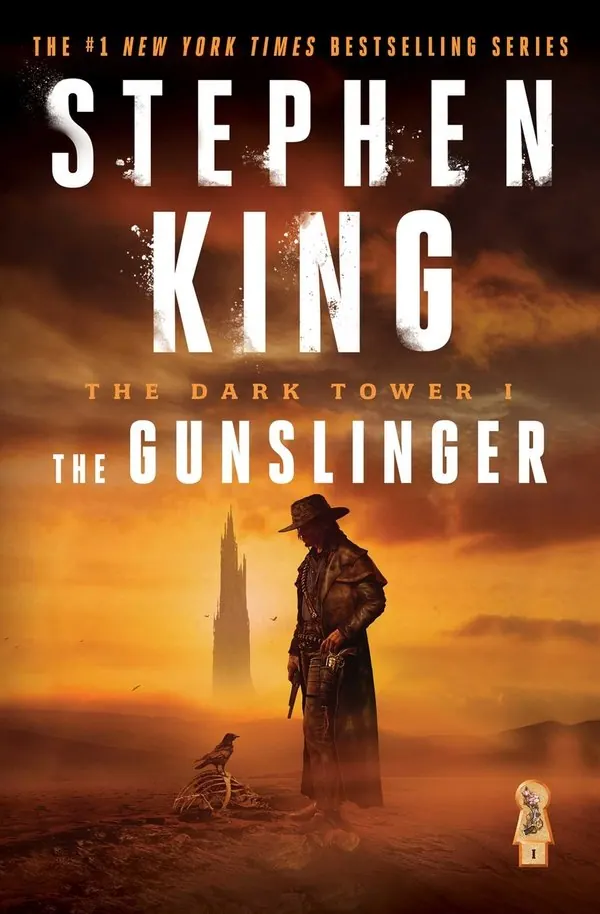
“The man in black fled across the desert, and the gunslinger followed.”
I think that was the perfect way to start this book. You’ve got one man running and another man following him across a desert, and immediately there’s something to figure out. Who are these people? What happened between them? How far is the gunslinger willing to go to catch him? King gives you that pursuit in the first sentence, and the rest of the book starts showing you what kind of man is doing the following.
The Gunslinger follows Roland Deschain, the last gunslinger, through a world that feels worn down and half abandoned. He’s tracking the man in black, but his larger goal is the Dark Tower. There are pieces of a much bigger story everywhere, even when you don’t yet understand how they fit together.
Roland is the definition of a badass.
That was one of the things I liked most about him. He has his main focus, and he’ll kill anyone who gets in his way. There’s something about following a character that determined. You know where his attention is, and when somebody puts themselves between him and what he wants, you know it could go very badly for them.
I pictured him as a young Clint Eastwood pretty much the whole time. The guns, the desert, that hard look, and the sense that this is somebody you probably shouldn’t fuck with. That image fit the way King wrote him. Even with all the strange things happening around him, I had a clear picture of Roland in my head.
Tull gives you an early look at how dangerous Roland can be. The man in black has already passed through, and Roland walks into the trouble he’s left behind. You start seeing what those guns and that determination actually mean when somebody pushes him.
Jake brings another side of the journey into focus. He’s a young boy who becomes Roland’s traveling companion, which puts somebody alongside a man who seems built to keep moving on his own. Their relationship gives you more to think about than whether Roland can catch the man in black. There’s also the question of what it would actually be like to depend on someone whose attention is fixed so firmly on his own goal.
One of my favorite things about Stephen King is how many of his books touch each other. I talked about that in my Black House review, because having read The Dark Tower made those connections mean a hell of a lot more to me. This is where that journey starts. Looking back at The Gunslinger after reading the whole series gives the beginning a different weight.
“Go then. There are other worlds than these.”
That phrase stuck with me. I’ll leave the circumstances around it alone, but it captures something about the possibilities in this story. You’re following Roland through one strange world while getting the sense that there could be a lot more beyond it.
For me, this book is the hook for everything that follows. The desert, Tull, Jake, and the man in black give you plenty to think about, but there’s still so much you don’t know. You want to understand what the Tower means, why Roland is so determined to reach it, and what kind of world could have produced someone like him.
I think that’s what a first book needs to do: give you enough to care about the journey ahead. Roland’s focus was a big part of the appeal for me. King puts this dangerous, determined man in front of you from the first sentence, and The Gunslinger gave me a reason to keep following him.
Who I’d recommend it to: Readers who like dark fantasy, a Western feel, and a dangerous main character with a clear goal. If you’re interested in following Roland into a much bigger story, this is where I’d start.
Caution: This book leaves you with plenty of questions, so don’t expect all the answers right away. There’s violence, disturbing material, and danger involving a child.
Discussion question: Did The Gunslinger hook you immediately, or did it take another book for The Dark Tower to click?
— Cory Lane