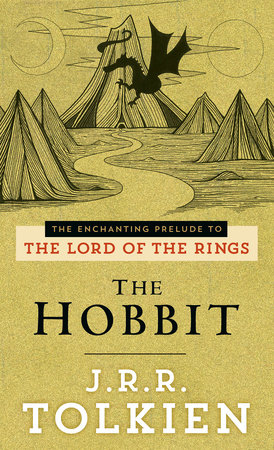
The Hobbit is one of my favorite fantasy books of all time, and Bilbo is a big reason why. He’s sheltered, comfortable, and pretty clueless about what’s waiting outside his little corner of the world. Then Gandalf and thirteen dwarves show up, and suddenly he’s being considered for a job involving a dragon. That’s a hell of a change from worrying about what’s in the pantry.
The story follows Bilbo and the dwarves on a journey toward the Lonely Mountain, where Smaug sits on the treasure they want to reclaim. It’s an easy setup to get behind, but following Bilbo into it is what makes it work. He has plenty of reasons to stay home. He likes his food, his routine, and knowing what to expect. I understand that. Leaving your comfort zone sounds great until you actually have to do it.
Tolkien lets that adjustment be difficult. Bilbo gets frightened, misses home, and has moments where he clearly wonders what he’s gotten himself into. His early attempt to prove himself around the trolls shows just how inexperienced he is. Having something to prove doesn’t suddenly mean you know what you’re doing. Watching him learn gives the adventure a lot of its personality.
The dwarves were a great addition. They have different attitudes, and I enjoyed how those personalities bounced off Bilbo and each other. Thorin carries himself with pride and authority, Balin has a friendlier manner with Bilbo, and Bombur makes his discomfort known. Some get more attention than others, but the company never felt like thirteen copies of the same character to me. Even the opening visit, with everyone crowding into Bilbo’s home, gives you a feel for what traveling with this group is going to be like.
Gollum and the riddles really stuck with me. There’s something unsettling about that whole encounter: the darkness, the underground lake, and Bilbo having to deal with someone he doesn’t understand. The danger depends on whether he can keep his head and think of an answer. I like fighting in fantasy, but this scene gets plenty tense with two characters asking each other questions. Gollum makes a guessing game feel like a terrible situation to be in.
Middle-earth deserves just as much attention as the characters. The comfort of Bilbo’s home, the shelter of Rivendell, the exposed mountain paths, and the darkness of Mirkwood all have their own atmosphere. The terrain matters. A mountain crossing can turn dangerous with the weather, and a forest can make simply finding your way feel difficult. You understand why getting from one place to another takes so much out of them.
The maps add to that. The Wilderland map gives the journey a shape, with mountains, rivers, and forests separating the places the company needs to reach. Thrór’s map has a different purpose: its runes and clues are part of the adventure itself. I appreciate that kind of design. The lettering and drawn landscape feel like they belong to the world you’re reading about. There’s something to examine and wonder about before you even know what all of it means.
That same care shows up in the dwarves’ songs about their lost home. They give the journey a history and help explain why it matters so much to them. You can feel that these places meant something to people long before Bilbo arrived. Tolkien gives you enough of that past to make the world interesting without making you learn its entire history first.
Underneath the adventure, there’s a lot about what people value. Bilbo’s appreciation for a meal, a comfortable home, and some peace seems pretty reasonable when you put it beside the trouble that pride and the desire for treasure can cause. The book gives kindness and good judgment real importance. Being the strongest person in the room doesn’t automatically make you the one worth listening to.
For me, the biggest message is still how hard it can be to step outside the life you know. Bilbo has to make decisions while he’s scared and unprepared. That makes his courage easier to believe. He’s a character I can understand, even with a wizard, dwarves, and a dragon involved.
You can absolutely read The Hobbit as a standalone book and get a complete adventure. I think it goes even better alongside The Lord of the Rings, though. I’d start here, spend some time with Bilbo, and then carry on into the trilogy. These are some of my favorite fantasy books, and this is a great place to begin.
Who I’d recommend it to
Someone getting into fantasy, someone wanting to try Tolkien, or anyone who enjoys a journey with an unlikely main character and a memorable group around him. You don’t need any knowledge of Middle-earth before starting.
Caution
The storytelling has an older, read-aloud feel, with songs and a narrator who sometimes speaks directly to the reader. Expect dangerous creatures, threats, battles, and some sad moments despite the lighter opening. The fighting isn’t described with the graphic detail you’d find in darker modern fantasy.
Discussion questions
Would you have left with Gandalf and the dwarves, or told them to enjoy the trip?
Which dwarf stood out to you most, and why?
The riddles with Gollum were a highlight for me. Was that your favorite part too, or did another stretch of the journey stick with you more?
Keep the comments spoiler-free, or clearly mark spoilers before discussing specific outcomes.
— Cory Lane